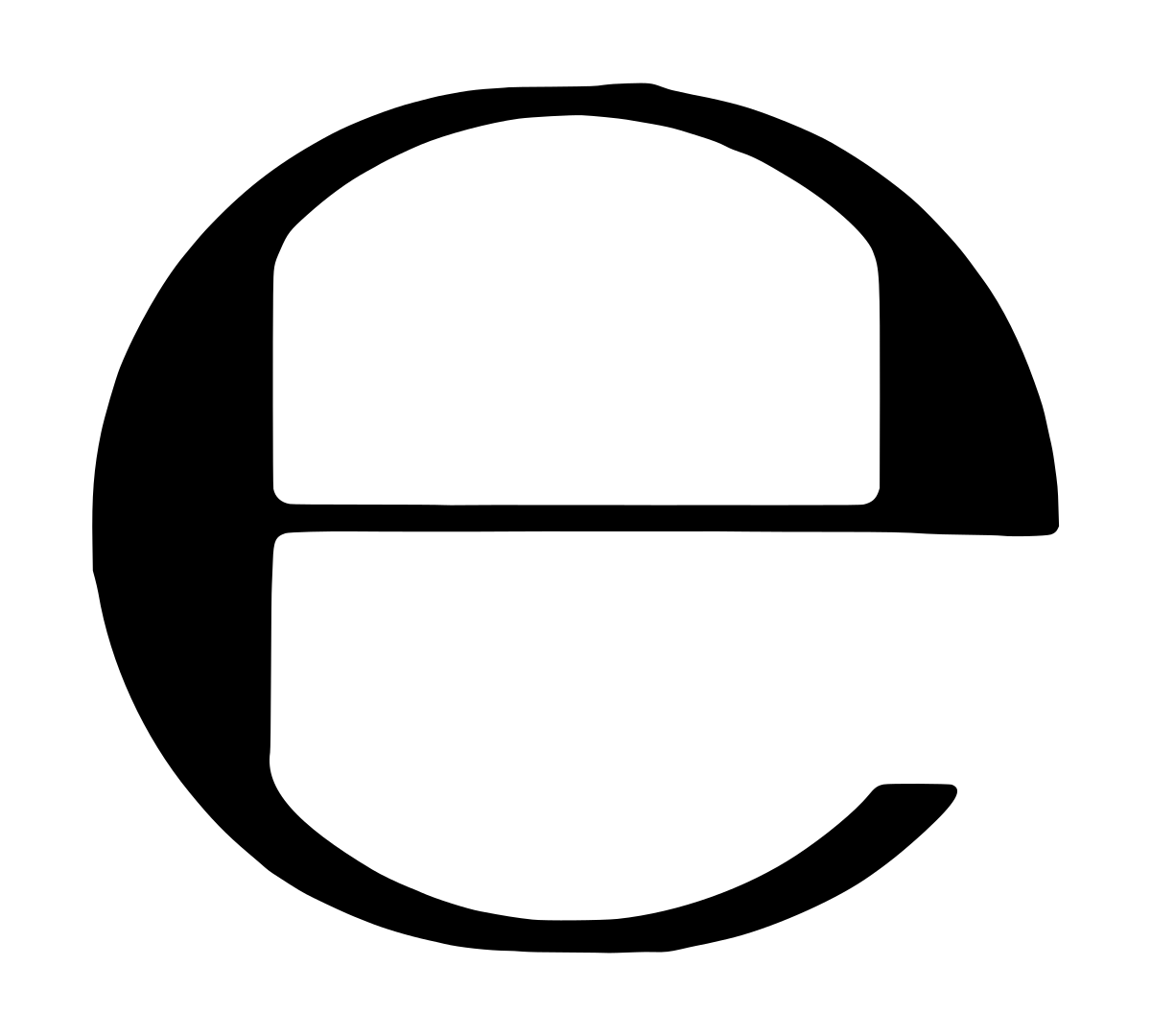

What the ℮ means
The ℮ is a guarantee by the packer or the importer that the prepackage meets the requirements of Directive 76/211/EEC (Annex I, point 3.3). In short, the packages are filled by the average system: the actual contents must not be less, on average, than the nominal quantity, only a small proportion of packages may fall short by more than the tolerable negative error, and no package with more than twice the tolerable negative error may bear the ℮ (Annex I, point 1).
The directive covers prepackages of constant nominal quantities from 5 g or 5 ml to 10 kg or 10 l (Article 1). Using the ℮ is optional: prepackages that comply with the directive may bear it (Article 3). The packer or importer is responsible for checking the quantities (Annex I, point 4).
Size and placement
The ℮ must be at least 3 mm high and placed in the same field of vision as the nominal weight or volume (Annex I, point 3.3). It must have the shape of the drawing referred to in the directive, which is what the generator draws. The markings must be indelible, easily legible and visible in normal conditions of presentation (Annex I, point 3).
The figures of the nominal quantity have their own minimum height (Annex I, point 3.1):
| Nominal quantity | Minimum height of the figures |
|---|---|
| up to 50 g or 5 cl | 2 mm |
| over 50 g or 5 cl, up to 200 g or 20 cl | 3 mm |
| over 200 g or 20 cl, up to 1 000 g or 100 cl | 4 mm |
| over 1 000 g or 100 cl | 6 mm |
Tolerable negative error
The tolerable negative error is how much less than the nominal quantity a single package may contain (Annex I, point 2.4). Percentages are worked out in grams or millilitres and rounded up to the nearest tenth.
| Nominal quantity (g or ml) | Tolerable negative error |
|---|---|
| 5 to 50 | 9 % |
| 50 to 100 | 4.5 g or ml |
| 100 to 200 | 4.5 % |
| 200 to 300 | 9 g or ml |
| 300 to 500 | 3 % |
| 500 to 1 000 | 15 g or ml |
| 1 000 to 10 000 | 1.5 % |